Monday, 3 August 2015

CSIR-TKDL Unit Successfully Prevented UK Company’s Bid to Patent Use of Turmeric, Pine Bark & Tea for Treating Hair Loss

Dhirendra Kumar
News Curator cum Moderator
Indian Botanists
India once again has been successful in protecting its traditional knowledge by preventing an attempt made by Europe's Leading Dermaceutical Laboratory-Pangaea Laboratories Limited, to take patent on a medicinal composition containing turmeric, pine bark and green tea for treating hair loss.

Traditional Knowledge Digital Library (TKDL), a Unit of Council of Scientific and Industrial Research, located the patent application filed at European Patent office by M/S Pangaea Laboratories Limited and filed pre-grant opposition along with prior-art evidences from TKDL, proving that turmeric, pine bark and green tea, are being used as a treatment for hair loss, since long in Indian systems of medicine like Ayurveda and Unani. The above UK based company had filed the patent application at European Patent office in February, 2011. CSIR-TKDL Unit had filed evidences from TKDL on January 13, 2014 after the patent application got published on website, pursuant to which the patent application is finally deemed to be withdrawn by the applicant on June 29, 2015. Till date CSIR-TKDL Unit has achieved success in about 200 such cases without any cost.

Recently, CSIR-TKDL Unit has foiled an attempt of M/S Colgate-Palmolive Company to patent a mouthwash formula containing herb (Nutmeg- Jayaphal) extract used in Indian traditional systems of medicine to cure oral diseases, at European Patent office.

Traditional Knowledge Digital Library of Council of Scientific and Industrial Research (CSIR-TKDL), headed by Dr. Archana Sharma, submitted proof in the form of references from ancient books in this case, which said the herb and its extracts of Myristica Fragrans were historically used for oral diseases in Indian systems of medicine. 
TKDL is a collaborative project between Council of Scientific and Industrial Research (CSIR), Ministry of Science and Technology and Department of AYUSH, Ministry of Health and Family Welfare, and is being implemented at CSIR. It provides information on traditional knowledge existing in the country, in languages and format understandable by patent examiners at International Patent Offices (IPOs), so as to prevent the grant of wrong patents. TKDL thus, acts as a bridge between the traditional knowledge information existing in local languages and the patent examiners at IPOs.
[Source: Press Release, Press Information Bureau, India]

Saturday, 1 August 2015

Flood and Drought Resistant Seeds Developed by The National Agricultural Research System, India

Dhirendra Kumar
News Curator cum Moderator
Indian Botanists

The National Agricultural Research System (NARS) comprising Indian Council of Agricultural Research (ICAR) and State Agricultural Universities has developed flood/drought tolerant crop varieties for different regions of the country. Important flood and drought tolerant varieties/hybrids of different crops are listed below. 

Important flood and drought tolerant varieties/hybrids of different crops

The seeds of flood/drought tolerant varieties of different crops are made available to the farmers in the area/state/region of recommendation. Besides, under technology demonstration component of National Initiative on Climate Resilient Agriculture some of these varieties are also demonstrated to farmers in various flood/drought prone regions of the country.

This information was given by the Minister of State for Agriculture Dr. Sanjeev Kumar Balyan in Rajya Sabha on July 31st 2015.
 
[Source: Press Release, Press Information Bureau, India]

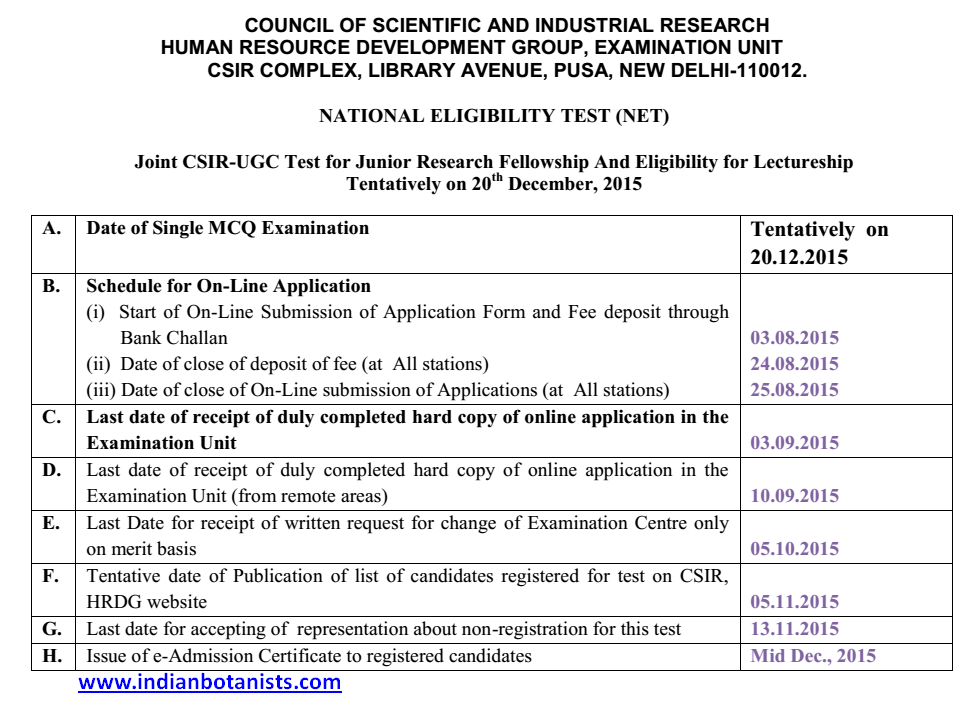
CSIR notifies Joint CSIR-UGC Test for JRF (NET) Dec 2015

For more details and latest updates click here

Join NET JRF CORNER

Sunday, 5 July 2015

Sir Fazle Hasan Abed of Bangladesh Wins The World Food Prize 2015

Sir Fazle Hasan Abed of Bangladesh, the internationally renowned founder and chairperson of BRAC, will be honored as the 2015 World Food Prize Laureate for his unparalleled achievement in building a unique, integrated development organization that many have hailed as the most effective anti-poverty organization in the world. 

Sir Fazle Hasan Abed
Sir Abed was born in 1936 in Baniachong, in Bangladesh’s Habiganj district. He attended the University of Glasgow in Scotland to study naval architecture. Further he also did his graduation from the Chartered Institute of Management Accountants in London in 1962 to make a career in accounting.

He worked for Shell Oil Company in Chittagong on top position during the period 1970-71. After resigning from Shell he formed the Bangladesh Rehabilitation Assistance Committee (later renamed as Bangladesh Rural Advancement Committee ´-BRAC’s ) to address the terrible devastation suffered by the people of his country.

Press advisory released from World Food Prize mentions, "In the area of agriculture, Abed’s leadership has led to extraordinary advancements in the poultry, seed, and dairy industries in Bangladesh, and has forged a path for progress in the global agricultural sector, enhancing food quality and security across the developing world".

The Chairman of the World Food Prize Selection Committee and the first World Food Prize Laureate in 1987, Dr, M.S. Swaminathan, has praised Sir Fazle Hasan Abed as a “strategic thinker, and a man with a future vision.”

Pic courtesy: BRAC Blog
The World Food Prize was conceived by Dr. Norman E. Borlaug, recipient of the 1970 Nobel Peace Prize. Since 1986, The World Food Prize has honored outstanding individuals who have made vital contributions to improving the quality, quantity or availability of food throughout the world. Laureates have been recognized from Bangladesh, Belgium, Brazil, China, Cuba, Denmark, Ethiopia, Ghana, India, Israel, Mexico, Sierra Leone, Switzerland, the United Kingdom, the United Nations and the United States.

Thursday, 25 June 2015

Impact factors of Plant Sciences Journals from Springer and BioMed Central Publishing Group

Team Indian Botanists compiled the impact factors of plant sciences journals from Springer and BioMed Central publishing group. Click on your journal of choice for more details, such as how to submit, or to access sample articles. Impact factor is based upon the latest rankings (2014) of  JCR Thomson Reuters. Scroll down to download the full pdf list.

Logo belongs to Springer Inc.


*2014 Impact Factors, JCR®, Thomson Reuters
Source: http://www.springer.com/gp/impact-factor-2014

Wednesday, 24 June 2015

Ethnobotanical Uses of 15 Aquatic Weeds Found In the Wetlands of Goa

Dr. SIMA V. KAMAT
Department of Botany
P.E.S.'s S.R.S.N. College of Arts and Science
Farmagudi, Goa, India

Nature provided man with all the basic requirements for his existence, which is one of the reasons why nature was respected in the olden times. After coming in contact with plants people began to realize their significance, importance and how they could be of great use to them. Since ancient times, man has been using different parts of various plants as drugs. This dependency on plants for medicine not only prompted good health but also helped in maintaining a balanced environment. The variety of plants used differed from place to place depending on the confined ecosystem and requirements although the human problems they dealt with remained the same. For thousands of years plants have demonstrated their effectiveness not only as healing agents but also as care-takers of the surrounding environment.

Monday, 22 June 2015

Plant Vs Plant, and what about stars?

Gangadhar Panday
@gangactor on twitter
Founder
Babul Films Society- non-profit NGO

It is an ancient Indian tradition to plant trees corresponding to each sign of the moon. The belief is that a person will prosper in life if he/she plants and takes care of a tree associated with their Nakshatra [ there are 27 stars as per Indian astrology]. The growth and flourishing of the tree indicates the individual’s prosperity, that was the firm faith prevalent. If a kid of today is asked the question – ‘what is a plant? The most probable answer will be ‘factory’ and not ‘tree’. With the single point program of earning money, at any cost and by any means, dominating the minds of people, the faith faded away and trees lost their importance and to a major extent their existence.

Foundation stone for National Agricultural Research Institute in Barahi, Jharkhand to be laid by PM on 28th June

Union Agriculture Minister, Shri Radha Mohan Singh today reviewed the preparation for laying of foundation stone of National Agricultural Research Institute in Barahi, Jharkhand.


Shri Radha Mohan Singh, Union Agri Minister with ICAR officers inspecting the site for NARI
The foundation stone will be laid by the Prime Minister of India, Shri Narendra Modi, on 28th June, 2015. Shri Singh today visited the venue alongwith DG, ICAR, Dr. S. Ayyappan and Agriculture Ministry Officials, Government of India. Minister had detailed discussion with officials about the progress of the proposed Institutes’ inaugural.

Barhi stands at the crossing of  Grand Trunk Road (NH2), NH31 and NH33. Hence it connects well through major cities like Ranchi, Patna, Gaya, Dhanbad.


Also Read
Agriculture Minister Radha Mohan Singh lays foundation stone of Indian Institute of Agricultural Bio-Technology at Ranchi, Jharkhand

Sunday, 14 June 2015

Dr Sanjay Kumar appointed as Director of Institute of Himalayan Bioresources Technology, Palampur.

Dr Sanjay Kumar 
Dr Sanjay Kumar has joined as Director of Institute of Himalayan Bioresources Technology, Palampur. He has been associated with the institute for over 25 years. He said that Himalaya has a gold mine of opportunities in terms of its bio-resources. Institute under his leadership is developing technologies for industry & environment. IHBT is committed to develop floriculture & enzyme discovery for furtherance of human healthcare. His institute is also working on developing alternatives to sugar as sweetners for diabetics. Research related to climate change in Himalayas will be his priority as Director. 
 
Including Dr Kumar, five new directors of Council of Scientific and Industrial Research (CSIR) Institutes have taken charge. After taking charge,these Director’s attended the two day CSIR Director’s conference at the Indian Institute of Petroleum, Dehradun.

The Minister for Science & Technology Dr. Harsh Vardhan complimented newly joined Directors, in his opening remarks at the CSIR Director’s Conference.

Institute of Himalayan Bioresources Technology provides research and development services on economic bioresources in western Himalayan region leading to value added plants products and processes for industrial, societal and environmental benefit.

Thursday, 4 June 2015

PM plants "Kadamb" sapling on World Environment Day

The Prime Minister, Shri Narendra Modi, today planted a Kadamb sapling (Neolamarckia Cadamba), at the Race Course Road lawns, to mark the occasion of World Environment Day.

Speaking on the occasion, the Prime Minister exhorted each family to plant trees in the coming monsoon season, and to take pride in the number of trees planted by the family, just the same way as they take pride in worldly possessions. The Prime Minister said that living in harmony with nature is the only way to avoid a catastrophic situation on Mother Earth.

The Prime Minister also placed a traditional earthen-pot (matka) along with the sapling, which is a traditional way of conserving water, and ensuring that the sapling has regular water supply.

Planting the Kadamb sapling, the Prime Minister recalled the poem of Subhadra Kumari Chauhan, on the subject: